
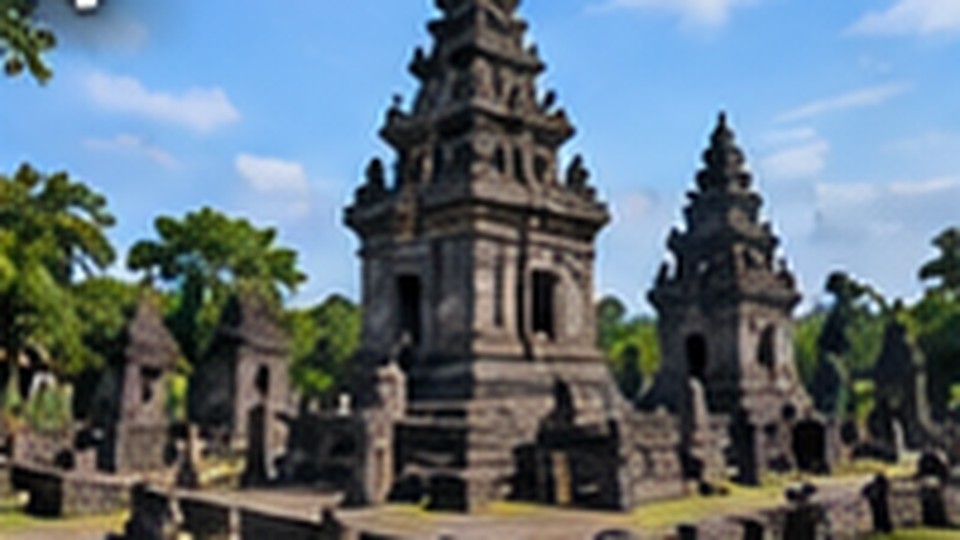
Blitar – Candi Penataran, located in Nglegok District, is known as the largest Hindu temple complex in East Java, holding a number of unique features that set it apart from other temples across the archipelago. These features make Candi Penataran a must-visit historical destination.
One of the temple’s key distinctions lies in its remarkably long construction span, beginning in the era of the Kediri Kingdom through the golden age of the Majapahit Kingdom. This long timeline gives the complex layers of history and architectural style from several different kingdom periods within a single site.
Reliefs and ornaments rich in meaning
The beauty of the reliefs decorating the temple walls is a particular draw for visitors. Epic tales such as the Ramayana and Krishnayana are carved in exquisite detail, reflecting the high level of stone-carving artistry of the era.
Beyond narrative reliefs, decorative motifs of flora and fauna typical of ancient Java also adorn various corners of the temple, adding aesthetic value along with cultural information that visitors can learn from.
Historical function as a place of worship
Candi Penataran is believed to have once served as an important center of religious activity, especially for the Majapahit Kingdom, which used the temple to pray for protection from volcanic disasters, given its location at the foot of the still-active Mount Kelud.
This rich history and architecture make Candi Penataran one of the most valuable cultural heritage sites in East Java. A visit offers a deep educational experience for anyone wishing to understand the glory of the great kingdoms of the Nusantara’s past.